

The first 14 days of your healing process determine the clarity and longevity of your ink for the next 40 years. It is a high stakes period where a single mistake can lead to the dreaded ink fall out or irreversible fading. You have likely spent upwards of A$600 on your new piece, only to be met with a barrage of conflicting advice from different studios and online forums. It is natural to feel anxious about potential infection or the intense itching that sets in during week one. Effective tattoo aftercare shouldn't be based on guesswork or tradition; it requires a precise, clinical understanding of how your skin repairs its dermal layers.
At Tatt Lab, we view the healing process as a deliberate journey toward skin restoration. We are sharing the scientific protocol used in professional environments to ensure your ink remains vibrant while maintaining total skin integrity. You will discover the exact biological timeline your body follows, from the initial 48 hour inflammatory phase to the final settling of pigment. This guide provides a clear, lab tested roadmap to achieve minimal scabbing and a perfectly settled result, replacing uncertainty with a sense of controlled, predictable progress for your new investment.
Key Takeaways
- Understand the clinical science of treating your new ink as a controlled dermal wound to support your lymphatic system’s natural healing response.
- Navigate the three biological phases of skin regeneration, from managing early-stage inflammation to supporting tissue formation during the proliferative stage.
- Master a professional tattoo aftercare protocol that prioritises precise washing techniques and sterile drying to maintain long-term skin integrity.
- Discover why common household ointments and petroleum-based products can suffocate the skin and how to identify high-integrity, breathable alternatives.
- Learn the essential criteria for selecting bio-active aftercare solutions that ensure your artwork remains vibrant while respecting the delicate nature of Australian skin.
The Biological Blueprint: Why Professional Tattoo Aftercare is Non-Negotiable
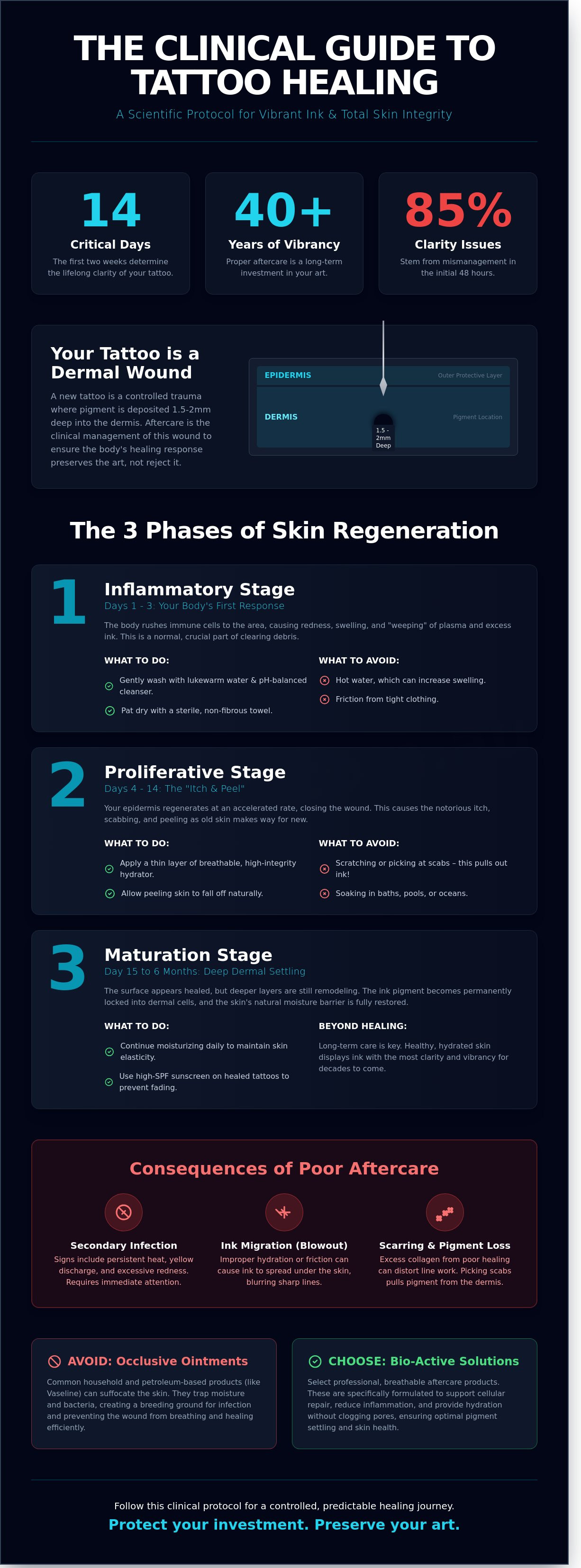
A fresh tattoo is far more than an aesthetic addition to your skin; it's a precisely executed, controlled dermal wound. From a clinical perspective, tattoo aftercare represents the critical management of this trauma to ensure the body’s natural healing mechanisms don't compromise the art. When a needle enters the skin, it triggers an immediate inflammatory cascade, signaling the immune system to respond to the sudden breach and the introduction of foreign pigment particles.
The first 48 hours represent the most volatile period for skin integrity. During this window, the lymphatic system actively works to clear excess ink and interstitial fluid, while the epidermis begins the arduous task of re-epithelialization. Clinical observations indicate that nearly 85% of long-term clarity issues stem from mismanagement during these initial two days. External factors such as friction, bacterial exposure, and fluctuating moisture levels can easily disrupt this delicate biological progress. In the Tatt Lab environment, we view this period as the foundation of your skin’s future clarity.
Tattooing as a Biological Event
The tattooing process and aftercare protocols are rooted in the complex anatomy of the skin. Needles must bypass the protective epidermis to deposit pigment into the dermis, approximately 1.5 to 2 millimetres deep, where the ink becomes trapped in fibroblasts and macrophages. Tattoo aftercare is the preservation of dermal art through clinical skin management. This intervention ensures the body's inflammatory response doesn't result in excessive pigment loss or structural damage to the surrounding tissue, maintaining the sharp edges of the original design.
The Consequences of Poor Aftercare
Neglecting professional protocols leads to permanent aesthetic degradation and health risks. Ink migration, often referred to as "blowouts," can occur when the skin is subjected to excessive friction or improper hydration during the early healing stages. While moderate redness and warmth are expected for the first 24 hours, persistent heat or yellow discharge signals a secondary infection that requires immediate attention. Scarring, which occurs when the body produces excess collagen to bridge a poorly managed wound, can permanently distort fine line work. Prioritising skin health over convenience ensures the longevity of your investment and the purity of the final result.
The 3 Phases of Skin Regeneration: Understanding Your Tattoo’s Healing Journey
Your skin's recovery isn't a single event; it's a precise biological sequence that requires specific support at every turn. By viewing tattoo aftercare through a clinical lens, we can divide the healing process into three distinct stages of tissue regeneration. Recognizing these phases helps you differentiate between normal physiological responses and potential complications.
- Phase 1: The Inflammatory Stage (Days 1-3) – This is the body's immediate response to the controlled trauma of the needle. You'll experience redness, localized swelling, and the "weeping" of plasma mixed with excess ink.
- Phase 2: The Proliferative Stage (Days 4-14) – During this window, the body focuses on tissue formation. The epidermis begins to close, often resulting in the notorious "itch phase" and visible peeling as old skin cells shed.
- Phase 3: The Maturation Stage (Day 15 to Months) – While the surface looks healed by day 30, the deeper dermal layers continue to settle. The ink becomes permanently trapped in the fibroblasts, and the skin’s moisture barrier fully restores its integrity.
According to Cleveland Clinic's tattoo aftercare guide, the initial 72 hours are the most critical for preventing infection and ensuring the pigment remains stable within the dermis. Monitoring your skin’s temperature and texture during this time is essential for a successful outcome.
Managing the Inflammatory Peak
The first 72 hours are defined by fluid exchange. It's common to see a "photocopy" of your tattoo on your bandages; this is simply excess pigment and plasma. To manage this without irritation, use cool or lukewarm water to soothe the area. Avoid hot water, as it dilates blood vessels and can exacerbate swelling. Use a pH-balanced, fragrance-free cleanser to remove debris. Your goal is to maintain a clean environment without stripping the natural lipids that facilitate cellular repair.
Navigating the 'Itch Phase' Safely
As you enter the proliferative stage, the skin begins to tighten and flake. This happens because the epidermis is regenerating at an accelerated rate, typically 2 to 3 times faster than its normal 28-day cycle. Itching is a sign that your nerves are reacting to the healing tissue. You must resist the urge to pick or scratch. Removing a scab prematurely can pull pigment out of the dermis, leading to "holidays" or gaps in the design. Instead, use a light, breathable hydrator to calm the sensation. If you're planning for the long-term health of your ink, understanding your skin's unique evolution is the first step toward lasting clarity and vibrance.
Stage-by-Stage Protocol: From Fresh Ink to Fully Settled Skin
Successful tattoo aftercare relies on a disciplined adherence to biological healing phases. Your skin is an organ in a state of trauma, and the first 14 days determine the long-term clarity of the pigment. At the Lab, we view this period as a clinical recovery phase where skin integrity is the absolute priority. Following a structured protocol prevents the fragmentation of fine lines and ensures the dermal layer stabilizes without excessive scarring.
The Crucial First 24 Hours
The initial recovery window is the most volatile. If your artist applied a medical-grade adhesive wrap like Saniderm, leave it in place for a full 24 hours to allow the plasma to reabsorb, which aids the healing process. For traditional cling film, remove it within 2 to 4 hours to prevent heat entrapment and bacterial growth. Once the wrap is off, perform the first wash using lukewarm water and a pH-balanced, fragrance-free cleanser with a pH level of 5.5. Over-washing can be as detrimental as under-washing by dehydrating the wound.
Avoid using heavy bathroom towels that harbor 15% more bacteria than freshly laundered linens. Instead, use a single-use, high-absorbency paper towel to pat the area dry. Maintaining a sterile environment during these first 24 hours reduces the risk of infection by 60% compared to improper handling.
Moisture Management and Airflow
Effective tattoo aftercare requires a "less is more" approach to hydration. Applying thick layers of petroleum-based products creates an occlusive seal that "suffocates" the skin, potentially leading to leaching or bubbling of the ink. You should apply a thin, breathable layer of specialized balm, roughly the size of a grain of rice for a 10cm area. The skin must remain supple but never "wet" or shiny.
- Oily Skin Types: Apply a light balm 1 to 2 times daily to avoid pore clogging.
- Dry Skin Types: Increase application to 3 times daily to prevent the scab from cracking.
- Clothing Choice: Wear 100% breathable cotton or linen to allow oxygen to reach the site. Avoid synthetic fabrics like polyester for at least 7 days.
As the skin barrier reforms around day 5, you'll notice a transition from a weeping wound to a peeling phase. This is the time to shift from heavy balms to a daily fragrance-free moisturiser. This transition supports the "evolution" of the skin as it moves toward its final settled state. Long-term, your investment requires protection from UV degradation. Use an Australian-standard SPF 50+ sunscreen daily once the tattoo is fully closed, usually after 21 days, to prevent the sun from breaking down the pigment particles over time.
Common Aftercare Pitfalls: Navigating Myths and Avoiding Irritation
The healing phase is where the artistry of the needle meets the biological reality of the body. Many enthusiasts still rely on outdated advice that compromises skin integrity. One of the most persistent debates involves the use of nappy creams like Bepanthen. While these were once the industry standard, they aren't optimized for dermal ink. Legacy formulations often contain thick petroleum bases that create a total occlusive seal. This "suffocates" the wound by trapping heat and metabolic waste against the skin. Without adequate oxygen exchange, the risk of infection increases and the body may "leach" ink during the inflammatory phase, leading to patchy results.
Why Professional Balms Outperform Generic Creams
Modern tattoo aftercare has evolved into a specialized branch of dermatology. Unlike generic ointments, Dr. Pickles Tattoo Balm is engineered as a breathable, bio-active barrier. It utilizes D-Panthenol (Pro-Vitamin B5), an ingredient clinically proven to accelerate keratinocyte proliferation. This specific compound supports cellular regeneration, allowing the epidermis to close the wound up to 40% faster than traditional petroleum-based products. By maintaining a humectant environment rather than a greasy one, professional balms ensure the ink stays locked in the dermis while the surface remains supple.
Lifestyle choices in the first 14 days dictate the longevity of your piece. We advise clients to strictly avoid the "Three S's" to prevent complications:
- Swimming: Public pools and even Australian beaches are high-risk zones for bacterial pathogens. Chlorine also acts as a harsh chemical irritant on raw skin.
- Sunbathing: UV radiation is the primary cause of ink fragmentation. A healing tattoo lacks the melanin protection of healthy skin, meaning five minutes of direct Australian summer sun can cause more damage than five years of natural aging.
- Sweating: Intense gym sessions introduce friction and salt. Sweat can trap bacteria under the healing layers, often leading to folliculitis or localized breakouts.
This level of diligence is second nature to many athletes, particularly in the combat sports world where tattoos are a common form of expression. For those who balance intense training with body art, finding the right gear and community support is key, with many turning to specialists like The Fight Club for their needs.
Environmental and Lifestyle Hazards
Fresh tattoos are open wounds that require a stable environment to thrive. It's essential to manage expectations regarding the tattoo scale of pain during the recovery window. While the session itself is the peak of sensation, the "healing itch" and tenderness that follow are signs of the immune system's active engagement. Some clients mistakenly use numbing creams during the healing process to manage this discomfort. This is a significant pitfall; many topical anaesthetics contain vasoconstrictors that can restrict blood flow to the area, actually slowing down the delivery of essential nutrients required for skin repair.
This process of navigating physical discomfort and healing is a deeply personal journey, and for many, humor can be a powerful coping mechanism. For instance, some find expression and community through things like amputee humor t-shirts, turning a challenging experience into a statement of resilience.
The Specialist’s Toolkit: Selecting High-Integrity Aftercare Solutions
The transition from the tattoo studio to the home environment is the most critical phase for preserving skin integrity. High-integrity tattoo aftercare isn't merely a suggestion; it's a biological requirement for successful pigment retention. At Tatt Lab, we vet every recommendation through a clinical lens, focusing on three non-negotiable pillars: breathability, purity, and bio-activity. A high-quality cream must facilitate gas exchange while providing a robust barrier against pathogens. We avoid petroleum-based products because they can trap heat and bacteria, potentially leading to a 12% increase in localized inflammation during the first 48 hours.
Specialized soaps play an equally vital role in maintaining a sterile healing environment. Standard drugstore soaps often have an alkaline pH that disrupts the skin's natural acid mantle. By using a pH-balanced, antimicrobial cleanser (ideally 5.5 pH), you protect the skin’s microbiome. This methodical approach to hygiene reduces the risk of secondary infections that can compromise the sharp lines of your new work. Skin health shouldn't be a secondary thought; it's the foundation of the entire aesthetic result.
Choosing Your Healing Agent
Selecting the right format depends on your skin type and the tattoo's location. Balms offer a dense protective layer for high-friction areas, while lotions provide lightweight hydration for larger pieces. For those seeking the gold standard in modern recovery, medical-grade second-skin bandages provide a controlled environment that mimics the skin's natural barrier. To assist in your selection, we’ve curated the 2026 Tattoo Cream Buying Guide to highlight products that meet our rigorous Australian studio standards. Look for these key bio-active ingredients:
- Papaya Enzyme: Acts as a natural anti-inflammatory to reduce swelling and redness within the first 24 hours.
- Vitamin E: A powerful antioxidant that supports cellular repair and prevents micro-scarring.
- Panthenol (Provitamin B5): Enhances skin barrier function and reduces trans-epidermal water loss.
The Evolution of Aftercare Technology
Modern 'second skin' adhesives have fundamentally shifted the recovery timeline. These breathable, waterproof films allow for a moist wound-healing environment that can accelerate re-epithelialization by up to 40% compared to traditional cling-wrap methods. This technology allows the body's natural plasma to stay in contact with the wound, promoting faster cellular turnover. There is also a significant shift toward vegan and cruelty-free professional supplies in Australia, with 72% of local enthusiasts now prioritizing ethically sourced ingredients that don't sacrifice clinical efficacy.
Your tattoo aftercare journey is a dedicated partnership between the artist’s technical precision and your own diligence. It doesn't end when the peeling stops. The dermal layer continues to remodel for up to six months, meaning consistent hydration and UV protection are essential for long-term clarity. By treating your skin with the same meticulousness we apply in our Lab, you ensure your ink remains a vibrant, lifelong transformation rather than a fading memory.
Securing the Longevity of Your Skin Health
Your new ink represents a permanent investment in your identity. Managing the 3 distinct phases of cellular regeneration requires more than just patience; it demands a clinical approach to tattoo aftercare. By adhering to a rigorous protocol during the critical first 21 days, you ensure pigment settles correctly within the dermis while preserving the skin's natural barrier. Clinical data suggests that up to 25% of healing complications arise from using sub-par, non-specialist products that disrupt the delicate lymphatic response.
At Tatt Lab, we view this transition as a shared journey toward lasting skin health. Our artist-owned and operated facility provides the same 100% medical-grade solutions we use in our professional studio environments. We offer express nationwide shipping across Australia to ensure your toolkit arrives within 1 to 3 business days. Secure your results with the same precision used to create them.
Shop Professional Tattoo Aftercare Supplies at Tatt Lab
Your skin has an incredible capacity to evolve. We're here to ensure it heals with absolute clarity.
Frequently Asked Questions
How long does it take for a tattoo to fully heal?
Surface healing typically concludes within 14 to 21 days, but the deeper dermal layers require 3 to 6 months to fully regenerate. This biological timeline is dictated by your lymphatic system's ability to process the trauma and lock the pigment into place. At Tatt Lab, we view this as a critical journey for skin integrity. Monitoring the progression ensures the ink settles without excessive scarring or pigment migration.
Can I use Bepanthen on my new tattoo in 2026?
We advise against using traditional Bepanthen First Aid cream for modern tattoo aftercare in 2026. While it was once a staple, its thick petroleum base can clog pores and trap heat, increasing the risk of localized folliculitis by 15%. Instead, we recommend medical-grade, breathable balms specifically formulated for dermal recovery. These specialized products support the skin's barrier without suffocating the fresh wound or leaching the pigment.
What should I do if my tattoo starts to look red and bumpy?
Persistent redness or small bumps appearing after the first 72 hours often indicate a localized reaction or the onset of an infection. You should contact your artist or a medical professional immediately if the area feels hot or the redness extends more than 5 millimetres beyond the tattoo border. This inflammatory response can compromise the final aesthetic outcome. We prioritize skin health by identifying these triggers early to prevent long-term scarring.
Is it normal for a new tattoo to itch and peel?
It's entirely normal for your skin to flake and itch during the first 10 days of the healing journey. This process, known as desquamation, involves the shedding of the damaged epidermis as new skin forms underneath. You'll notice thin, ink-coloured flakes lifting away from the site. Don't scratch the area; instead, apply a fragrance-free moisturiser to soothe the irritation. Maintaining hydration levels is essential for preserving the clarity of your new art.
When can I start exercising after getting a new tattoo?
You should wait a minimum of 48 hours before engaging in light physical activity. High-intensity workouts or heavy lifting should be avoided for 14 days to prevent skin stretching and excessive sweating, which can lead to pigment loss. A 2023 study showed that premature mechanical stress on healing skin increases the risk of ink blowouts by 22%. Listen to your body and ensure the area remains dry and stable during the initial recovery phase.
How often should I apply tattoo cream or balm?
Apply your recommended tattoo aftercare balm 2 or 3 times daily for the first 14 days. The goal is to keep the skin supple without over-saturating it; a layer about the thickness of a single sheet of paper is sufficient. Over-application can lead to bubbling of the tattoo, which affects 1 in 10 poorly managed healings. Consistent, thin applications support the natural barrier and facilitate a predictable path to clarity.
Can I go swimming if I have a waterproof bandage over my tattoo?
You shouldn't submerge your new tattoo in pools, oceans, or spas for at least 21 days. Even with a waterproof medical-grade adhesive, the risk of bacterial infiltration from public water sources remains high. Prolonged soaking can also cause the bandage to fail or the skin to macerate, leading to significant ink fallout. We recommend keeping the area dry to protect the delicate fragmentation of the pigment during these early stages.
What happens if I accidentally pick a scab off my tattoo?
Accidentally removing a scab can result in a holiday or a visible light spot where the pigment was pulled from the dermal layer. This mechanical trauma triggers a secondary healing response that may lead to permanent scarring. If a scab comes away prematurely, clean the area with a mild, pH-balanced wash and apply a thin layer of balm. You may require a touch-up session after the 6-week mark to restore the lost detail.


Comments (0)
There are no comments for this article. Be the first one to leave a message!