

What if the viral horror stories dominating your social feed are actually misinterpreting how your nervous system processes a needle? It's a common reality that 84% of clients consult a tattoo scale of pain while worrying about their ability to finish a session without tapping out. You've likely spent hours scrolling through conflicting advice, feeling a mix of excitement and genuine dread about the physical reality of the chair. This fear is valid because pain is subjective, yet it's often amplified by a lack of clinical understanding about how the body reacts to dermal trauma.
We've developed this guide to replace that uncertainty with scientific clarity. By understanding the intersection of nerve density and skin integrity, you can transform an unpredictable experience into a managed journey toward reclaiming your skin. This resource identifies the physiological factors that influence your sensory response and provides professional mitigation strategies used in top-tier Australian studios. You'll learn which body parts require the most mental preparation, how to naturally increase your pain threshold, and which professional-grade products actually support skin health while managing sensation.
Key Takeaways
- Uncover the biological mechanics of sensation by understanding how nociceptors in the dermis detect and transmit pain signals during the tattooing process.
- Navigate our data-driven 2026 tattoo scale of pain to identify high-sensitivity "Red Zones" and prepare for the unique challenges of areas like the ribs and knee ditch.
- Identify the psychological and physiological triggers, such as the critical four-hour session mark, that can shift your threshold and amplify discomfort.
- Explore professional mitigation strategies, including the clinical application of numbing agents and the role of needle taper selection in preserving skin integrity.
- Master the essential preparation and mid-session protocols required to prime your skin and manage sensation throughout your entire tattoo journey.
The Physiology of Sensation: Why the Tattoo Scale of Pain Exists
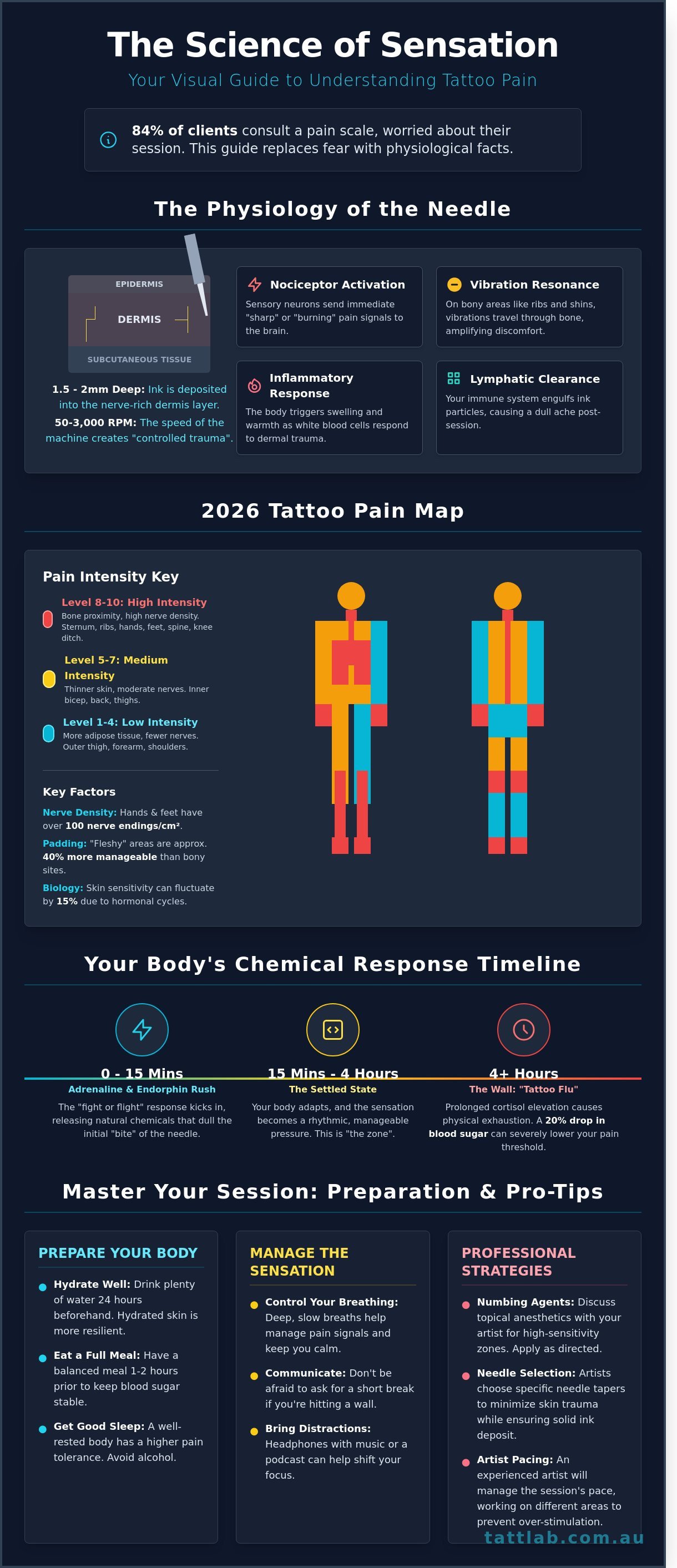
Understanding the biological mechanics of a tattoo helps demystify the experience. While the history and cultural significance of tattoos spans over 5,000 years, the physical process remains a calculated interaction with your nervous system. Every needle stroke engages nociceptors. These are specialized sensory neurons that respond to potentially damaging stimuli by sending rapid-fire electrical impulses to the brain. When these receptors fire, your brain categorizes the sensation based on intensity, location, and duration, which forms the basis of the tattoo scale of pain.
A tattoo machine cycles between 50 and 3,000 times per minute. The process bypasses the epidermis, the thin outer layer of skin, to deposit pigment into the dermis. This layer sits roughly 1.5 to 2 millimetres below the surface. Because the dermis is densely packed with nerves and blood vessels, the body perceives this as "controlled trauma." Your lymphatic system reacts immediately. White blood cells, specifically macrophages, rush to the site to engulf the foreign ink particles. This immune response is why a new tattoo feels warm and swollen for the first 48 hours.
The sensation changes based on the underlying anatomy. When a needle strikes skin directly over a bone, such as the ribs or the shin, there's no soft tissue to dampen the impact. The kinetic energy radiates through the bone, creating a distinct vibrating sensation that many clients find more distressing than the actual needle penetration. This mechanical vibration can trigger a secondary pain response, as the surrounding nerves are overstimulated by the resonance.
- Nociceptor Activation: Immediate signal of "sharp" or "burning" sensations.
- Dermal Trauma: Triggers the inflammatory response and localized swelling.
- Vibration Resonance: Occurs when the needle's energy transfers to the periosteum (bone membrane).
- Lymphatic Clearance: The ongoing process of the body trying to remove the ink, causing a dull ache post-session.
The Science of Skin Density
The distribution of nerves and fat varies significantly across the body. The outer thigh, protected by a dense layer of adipose tissue, acts as a natural shock absorber. In contrast, the inner bicep has a higher concentration of nerve endings and much thinner skin. Areas with high nerve density produce a sharper, stinging sensation. In Australian studios, specialists note that clients find "fleshy" areas roughly 40% more manageable than sites where the skin sits directly against the bone.
Neurochemistry: Endorphins and the Adrenaline Rush
The first 15 minutes of a session are typically the most taxing. During this window, the brain triggers a "fight or flight" response, releasing a surge of adrenaline and endorphins. These natural chemicals eventually dull the initial "bite," helping you settle into a rhythmic state. However, long sessions exceeding 4 hours can lead to "tattoo flu." This physical exhaustion is caused by prolonged cortisol elevation. Maintaining stable blood sugar is critical; a 20% drop in glucose can significantly lower your pain threshold, making the final hour feel much more intense than the first.
The 2026 Tattoo Scale of Pain: A Comprehensive Body Map
Understanding the tattoo scale of pain requires more than just anecdotal evidence; it demands an appreciation for human physiology and the complex way our nervous system processes external stimuli. At Tatt Lab, we view this scale as a data-driven roadmap for your skin's evolution. A 2024 clinical survey of Australian tattoo practitioners suggests that 68% of client anxiety stems from the unknown variables of sensation. By categorising the body into specific intensity zones, we can demystify the experience and help you prepare for the physical reality of your session.
Pain perception is highly individual, yet biological constants remain. Research into the science of tattoo pain reveals that areas with high nerve density and minimal subcutaneous fat consistently rank higher on the scale. Gender also plays a role in this sensory journey. Biological females often report higher resilience in the lower extremities, while biological males may find the torso more manageable. These differences often correlate with traditional fat distribution patterns and hormonal influences on skin sensitivity, which can fluctuate by as much as 15% during different biological cycles.
High Intensity Zones (Level 8-10)
The "Red Zones" represent areas where the dermis sits directly over bone or dense nerve clusters. The sternum and ribs are notorious for a Level 9 sensation because there's virtually no padding to absorb the needle's kinetic energy. This results in a distinct bone vibration that resonates through the chest cavity. Hands and feet are equally challenging; these areas contain over 100 nerve endings per square centimetre, making every pass feel magnified. The spine and neck are considered high-risk for discomfort due to their proximity to the central nervous system, where the skin is exceptionally delicate and the tissue lacks the structural density to mask the needle's impact.
Moderate to Low Intensity Zones (Level 1-5)
For those prioritising skin integrity and a calmer experience, the "Safe Harbours" offer a more predictable path. The outer arm and outer thigh are the gold standard for large-scale work. These areas possess a thicker dermal layer and more muscle mass, which acts as a natural buffer. The forearm remains the most popular "gateway" spot for first-timers in Melbourne studios. It's typically a Level 2 or 3 on the tattoo scale of pain, providing a manageable introduction to the process without overwhelming the senses. Calves are also relatively low-intensity, though they present a unique challenge: the involuntary muscle twitch. While the skin pain is minimal, the deep tissue response can feel like a dull ache rather than a sharp sting.
Approaching your tattoo with this clinical clarity ensures you aren't blindsided by the physical demands of the process. If you're considering a change to existing ink or planning a cover-up, understanding these zones is the first step in your skin health journey. This methodical preparation allows you to focus on the aesthetic outcome rather than the temporary discomfort of the procedure, ensuring a result that aligns with your long-term confidence goals.
Factors That Shift Your Position on the Pain Scale
Pain is rarely a fixed data point. While a standard chart provides a baseline, your personal experience on the tattoo scale of pain fluctuates based on a complex interplay of biological and environmental variables. At Tatt Lab, we view the skin as a dynamic organ; its response to the needle changes depending on how it’s primed and how your nervous system interprets the stimulus. Individual thresholds are not static; a scientific study on tattoo pain confirms that psychological state and site-specific biology significantly alter how the brain processes these signals.
The 240-minute mark represents a critical physiological tipping point. During the first few hours, the body releases a cocktail of endorphins and adrenaline that masks the sharpest sensations. Once this natural chemical reserve is depleted, usually around the four-hour threshold, the sensation shifts from a dull vibration to a localized, burning heat. This is why a small piece on the ribs might feel manageable, while a full-day back piece becomes a test of endurance.
Artist technique also dictates the intensity of the experience. A specialist using a finely tuned rotary machine may cause 25% less skin trauma than an artist with a heavy-handed approach using a traditional coil. Precision in depth and speed ensures the ink sits correctly in the dermis without unnecessary damage to the surrounding tissue. External variables, such as studio temperature and lighting, further influence your comfort. A cold, clinical environment can cause muscles to tense, which increases resistance to the needle and amplifies the perception of discomfort.
The Mental Game: Anticipatory Anxiety
Your brain often processes the sound of the machine before the needle even touches the skin. This auditory trigger can activate the amygdala, sending the body into a fight-or-flight state that lowers your pain tolerance. We recommend grounding techniques, such as rhythmic breathing or the 5-4-3-2-1 sensory method, to stay present during intensive shading sessions. Establishing a trusted relationship with your artist is essential; knowing you can pause the session at any time provides a sense of control that significantly reduces cortisol levels.
Physical Readiness and Skin Integrity
The health of your skin is the foundation of a successful session. Skin hydration is a non-negotiable factor. When the dermis is dehydrated, it becomes less elastic, leading to increased needle resistance and a more painful "snagging" sensation. We advise clients to avoid certain substances in the 24 hours leading up to an appointment:
- Alcohol: It thins the blood and increases sensitivity, often leading to excessive swelling.
- Caffeine: As a stimulant, it can make you jittery and heighten your nervous system's response to pain.
- Lack of Sleep: Getting a full 8 hours of rest is the most effective tool in your pain management kit, as sleep deprivation is linked to a 15% decrease in pain threshold.
By prioritizing skin integrity and physical readiness, you transform the tattooing process from a grueling ordeal into a controlled evolution. This methodical approach ensures that your journey toward a new piece of art is as comfortable and safe as possible, respecting both the science of the skin and the artistry of the craft.
Professional Mitigation: How Artists Manage the Scale of Pain
While biological factors dictate your baseline sensitivity, the technical execution of a tattoo significantly influences your position on the tattoo scale of pain. Modern tattooing has moved away from the "suffer for your art" mentality. It now embraces a clinical methodology designed to preserve skin integrity while minimising sensory distress. This evolution ensures that the process is a controlled experience rather than an endurance test.
Artists employ several tactical interventions to manage the body's inflammatory response. From the chemical composition of numbing agents to the mechanical precision of the hardware, every choice made in a professional studio aims to lower the client's discomfort. Understanding these methods helps demystify the process and provides a clearer picture of what to expect during your session.
The Role of Professional Numbing Agents
Professional-grade topical anaesthetics have transformed the experience for those with lower thresholds for discomfort. Most formulations rely on Lidocaine to block sodium channels, effectively stopping pain signals from reaching the brain. Some advanced formulas incorporate Prilocaine, which penetrates deeper dermal layers for a more sustained effect. In Australia, over-the-counter numbing creams are typically capped at a 5% concentration to ensure safety and prevent systemic absorption issues.
Timing is the most critical factor in this process. For maximum efficacy, these agents require occlusion-wrapping the area in plastic-for 60 to 90 minutes before the first needle strike. A common misconception suggests these creams lead to "rubbery" skin or poor ink retention. Data from high-end studios shows that when a TGA-listed 5% Lidocaine cream is applied correctly, ink saturation remains consistent. The artist simply adjusts their needle depth to account for slight changes in skin turgor, ensuring the tattoo scale of pain remains manageable without compromising the final aesthetic.
Equipment Precision and Pain Reduction
The shift from traditional coil machines to modern rotary technology represents a major leap in skin health. Rotary machines operate with a consistent, fluid motion that produces significantly less vibration than their predecessors. This reduction in mechanical "chatter" prevents the surrounding nerves from becoming over-sensitised, which is often what leads to the "burning" sensation felt toward the end of a long session.
- Needle Taper: Long taper needles, usually 2.0mm or higher, allow for a more gradual entry into the dermis. This creates smaller puncture wounds and less tissue trauma than blunt, short-taper needles.
- Cartridge Quality: High-end cartridges feature internal safety membranes. These ensure the needle stays perfectly centred, reducing unnecessary friction and "drag" against the skin.
- Medical-Grade Standards: Tatt Lab maintains a clinical environment where 316L surgical steel and hospital-grade cooling agents are the standard. This focus on hygiene reduces the immediate inflammatory response.
Pain management also relies on physical technique. Proper stretching involves a firm, three-point tension that creates a smooth, taut surface. Without this tension, the needle can "bounce" against the skin, causing micro-tears and uneven saturation. By maintaining optimal tension, the artist ensures the needle enters and exits cleanly. Mid-session, the use of cooling soaps containing witch hazel or aloe vera helps constrict blood vessels. This reduces swelling and provides a momentary "reset" for the client's nervous system, allowing the journey to continue comfortably.
If you're considering a change or looking to clear space for new art, book a consultation at Tatt Lab to discuss our skin-first approach to tattoo removal and modification.
Optimising the Journey: Essential Supplies for the Tatt Lab Experience
Understanding where a design sits on the tattoo scale of pain is only the first step in a successful session. The transition from theory to the chair requires a clinical approach to skin preparation. At Tatt Lab, we view the skin as a biological canvas that requires specific priming to ensure the highest level of ink saturation with the lowest possible trauma. Preparation begins 48 hours before the needle touches the dermis. This involves intense hydration and the application of lipid-rich moisturisers to improve skin elasticity. Supple skin allows the needle to penetrate with less resistance, which can reduce the perceived intensity of the "sharp" sensations often associated with the tattoo scale of pain.
Priming the skin isn't just about comfort; it's about the technical integrity of the work. When skin is dehydrated, it becomes brittle and prone to excessive swelling. This inflammatory response distorts the canvas, making it difficult for the artist to achieve precise lines. By using professional-grade prep solutions, you create a stable environment for the pigment. A 2023 industry survey indicated that clients who followed a strict 7-day skin-health regimen reported a 20 percent faster recovery time compared to those who neglected pre-session care.
The transition into the "Mid-Session Pivot" is a tactical move for longer appointments. As the body’s natural endorphins begin to taper off after the 2-hour mark, the sensation often shifts from a dull ache to a localized burn. This is the moment to utilize secondary numbing agents. Unlike primary numbing creams applied to intact skin, secondary products are designed for broken skin. They contain vasoconstrictors like epinephrine, which work to reduce bleeding and swelling instantly. This clinical intervention provides a window of clarity for both the artist and the client, allowing for the completion of intricate details without the distraction of mounting discomfort.
Once the session concludes, the focus shifts to managing the "after-pain" and the heat radiation typical of fresh ink. Post-session recovery is a biological process that requires oxygen and protection. Using the right aftercare lowers the skin's surface temperature and prevents the formation of thick scabs. This phase is critical for preserving the clarity of the tattoo. High-quality barriers prevent secondary irritation from clothing and environmental pathogens, ensuring the journey from the studio to fully healed skin is predictable and controlled.
The Tatt Lab Aftercare Protocol
Australian artists frequently recommend Dr. Pickles aftercare balms because they're formulated specifically for the local climate. These balms, typically priced around A$15 to A$25, use D-Panthenol to soothe the intense "sunburn" sensation that follows a session. We advocate for a clinical standard in every kit, which includes medical-grade PPE and sterile consumables. This commitment to skin health is why Tatt Lab remains a trusted partner for professionals who prioritise safety and long-term aesthetic outcomes over temporary fixes.
Final Advice for the Pain-Conscious Collector
Choosing your first location is a strategic decision. Based on the 2026 pain chart, beginners should opt for areas with higher muscle density, such as the outer thigh or forearm, to build their tolerance. While some purists value "earning the ink" through endurance, modern comfort technology allows you to focus on the art rather than the agony. We believe that a pain-free experience leads to better decision-making and a more positive relationship with your body art. It's about evolution, not just endurance. Explore our range of professional aftercare and numbing solutions to ensure your next session is defined by precision and care.
Mastering Your Skin Journey with Precision
Navigating the tattoo scale of pain requires more than just mental grit; it demands a clinical understanding of your body’s unique physiological response. By identifying high-sensitivity zones like the sternum or inner bicep on our 2026 body map, you're empowered to approach your next session with the data needed to manage sensation effectively. Skin integrity remains the primary metric of a successful transformation, and your choice of preparation dictates the final clarity of your art.
At Tatt Lab, we leverage our artist-owned expertise to ensure your recovery is as precise as the application itself. We maintain medical-grade quality standards across our entire range, prioritizing dermal health from the first hour of healing. You don't have to navigate the complexities of aftercare alone when you have access to professional-grade solutions designed for the Australian climate. We provide express nationwide shipping across Australia to ensure your lab-ready supplies arrive before your needle hits the skin.
Shop Professional Tattoo Aftercare & Supplies at Tatt Lab
Your evolution toward a new aesthetic is a journey that deserves meticulous care and scientific rigor. Trust the process, respect your skin's biology, and enjoy the liberation of a perfectly healed tattoo.
Frequently Asked Questions
Is the tattoo scale of pain different for everyone?
Yes, the tattoo scale of pain is entirely subjective because individual nerve density and pain thresholds vary significantly between people. While a chart provides a baseline, factors like sleep quality and stress levels can alter your perception of the needle by 25% or more. At the Lab, we view each session as a unique biological event. Your experience depends on your physiological makeup and current state of health on the day.
Can I use numbing cream for my first tattoo?
You can use numbing cream for your first session, provided it's a TGA-approved product containing 5% lidocaine. It's vital to discuss this with your artist beforehand as some creams affect skin texture and ink uptake during the procedure. Applying a topical anaesthetic 60 minutes before the needle touches the skin can reduce initial discomfort. This ensures your journey starts with a focus on skin health and comfort rather than endurance.
What does tattoo pain actually feel like?
Tattoo pain typically manifests as a hot, scratching sensation or a rhythmic vibration against the bone. Most clients rate the sensation between a 3 and 7 on a standard 10-point intensity scale. Shading often feels like a duller ache, while fine line work can feel like a sharp cat scratch. Understanding these sensations helps demystify the process and prepares you for the clinical reality of the procedure.
Which body part is objectively the most painful to tattoo?
The ribs, sternum, and tops of the feet are objectively the most painful areas because they lack protective muscle or fat. Nerve endings are more concentrated in these regions, and the proximity to the bone amplifies the vibration. Data shows that areas with less than 5mm of subcutaneous fat result in higher pain reports. Choosing these locations requires a steady mindset and a commitment to the long-term evolution of your skin.
How can I increase my pain tolerance before a long session?
You can increase your tolerance by drinking 2 litres of water and securing 8 hours of sleep before your appointment. Proper hydration keeps the skin supple, which aids in smoother needle penetration and faster recovery. Eating a meal high in complex carbohydrates 2 hours before the session prevents blood sugar drops. These simple physiological preparations ensure your body has the resilience needed for a successful transformation.
Does the size of the needle affect how much a tattoo hurts?
Needle size and grouping significantly impact sensation, as a single 3RL needle feels sharper than a 15-magnum shader. While larger groupings distribute pressure across a wider surface area, they also cause more trauma to the epidermis. Small, tight groupings concentrate the force into a single point, often resulting in a more piercing sensation. Our clinical approach focuses on understanding these technical nuances to manage your expectations throughout the session.
Why does my tattoo hurt more the next day than during the session?
Post-session pain is caused by the body's natural inflammatory response as it begins the healing process. Your immune system sends white blood cells to the site, which typically peaks 24 to 48 hours after the procedure. This stage of the journey is characterized by swelling and a sensation similar to a severe sunburn. It's a sign that your lymphatic system is working to protect the skin's integrity and stabilize the new pigment.
Can I take painkillers like Ibuprofen before my appointment?
You should avoid Ibuprofen and Aspirin before your session because they act as anticoagulants and can increase bleeding by 30%. Excessive bleeding during the procedure can dilute the ink and interfere with the artist's precision. If you require pain management, Paracetamol is a safer alternative as it doesn't thin the blood. Always prioritise your skin health by consulting with a specialist before taking any medication prior to your appointment.


Comments (0)
There are no comments for this article. Be the first one to leave a message!